Car Boot Struts
Have you ever opened your car boot only to watch it slowly sink back down, or worse, had it suddenly drop while you’re loading groceries? If this sounds familiar, your car boot struts (also known as tailgate gas springs or lift supports) are failing. But before you rush to a local garage and waste £150 on labour, here is everything you need to know to fix it yourself in 10 minutes—and how to spot a high-quality replacement that won’t fail next winter

What Are Car Boot Struts?
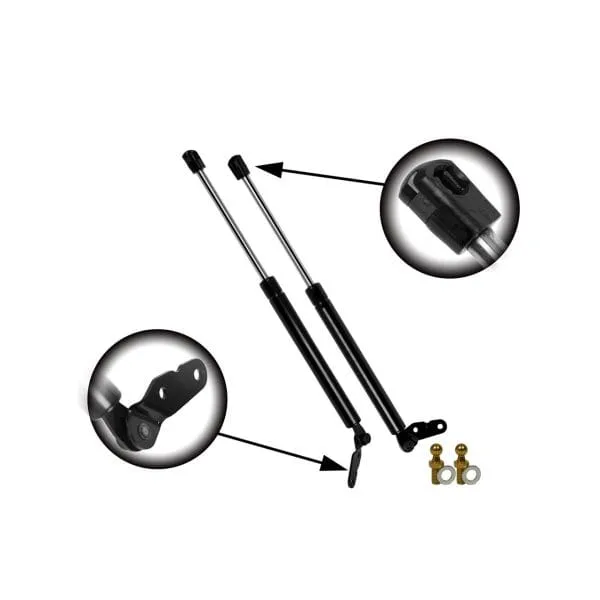
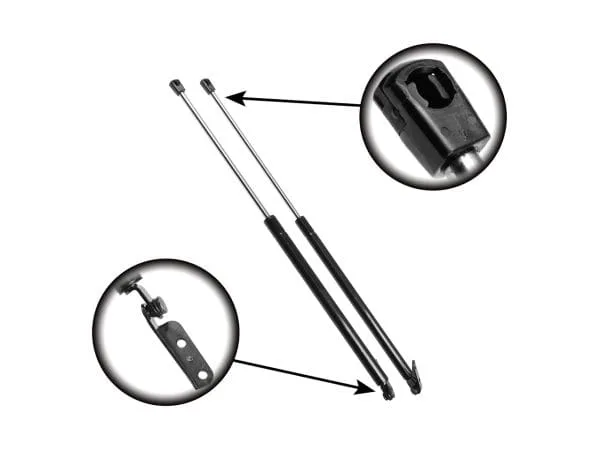
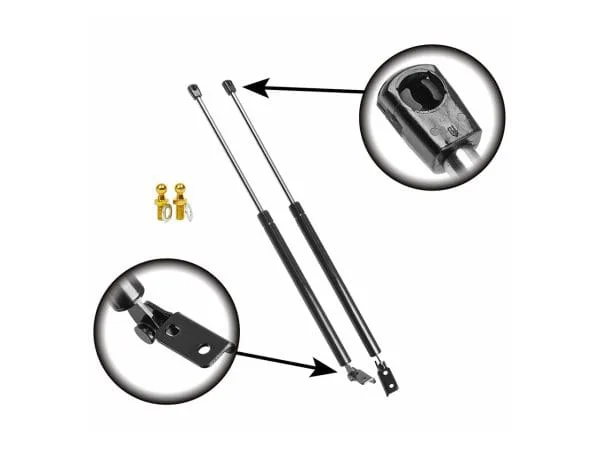
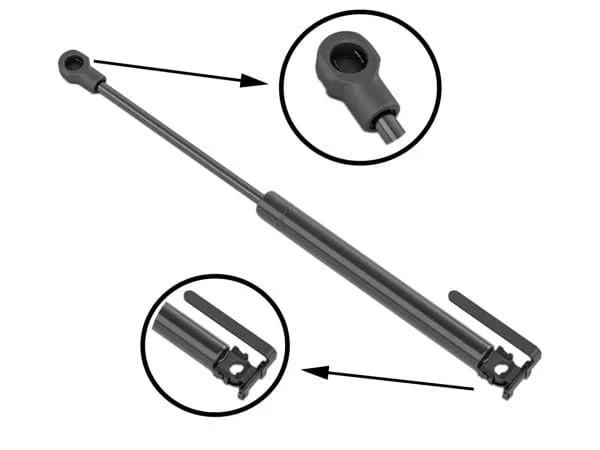
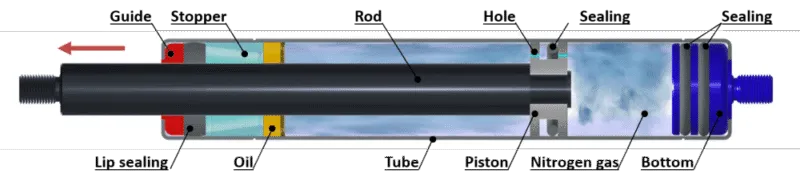
Often called tailgate gas springs, gas lifters, or lift supports, boot struts are small but incredibly powerful cylinders located on either side of your boot lid. Instead of using heavy mechanical springs, they rely on compressed nitrogen gas and a small amount of oil to provide the lifting force. This clever engineering allows even a child to open a heavy, 40kg metal tailgate with just the flick of a finger.
Why Is Your Boot Lid Suddenly So Heavy?
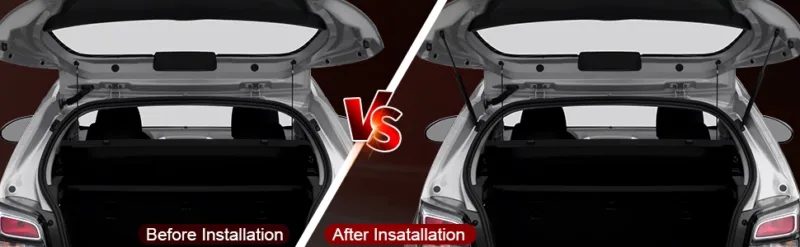
A standard car boot lid weighs anywhere between 30kg to 60kg (even more for large SUVs like a Nissan Qashqai or Land Rover). The only things keeping that heavy piece of metal from crushing you are two gas-charged cylinders.
When these struts lose their internal gas pressure, you aren’t just facing an inconvenience—you are dealing with a safety hazard. If your boot requires a heavy lift, sags in cold weather, or makes a screeching metal-on-metal sound, both struts need to be replaced immediately.
Warning Signs Your Car Boot Struts Need Replacement
Gas struts don’t last forever. Over 3 to 5 years, the micro-seals slowly degrade, causing the pressurized nitrogen gas to escape. Look out for these 4 red flags before your boot completely drops:
- The Heavy Lift: The boot lid feels significantly heavier, requiring you to physically push it all the way up.
- The Winter Sag: It works perfectly in summer but fails to stay open on freezing cold winter mornings (cold weather causes gas pressure to drop further).
- The Slow Creep: The boot opens fully but slowly slides back down after a few seconds, turning your car into a trap.
- Screeching & Oil Leaks: You hear annoying metallic noises every time you open the tailgate, or you notice greasy black oil sliding down the shiny piston rod.
The Golden Rule: If you spot any of these signs, both boot struts need to be replaced immediately. If one has leaked, the remaining strut is carrying double the load and will fail shortly.
GASTAC Boot Struts Designed for Multiple Vehicle Applications
The absolute biggest headache when ordering car parts online is fitment anxiety: “Will this actually fit my specific car?” GASTAC solves this by engineering 1:1 OE (Original Equipment) specification struts. We map the exact length, stroke, and Newton force for over 99% of vehicles on European roads:
- The Daily Drivers: Tailored for hatchbacks and saloons like the Ford Focus, Volkswagen Golf, Vauxhall Corsa, and Toyota Yaris.
- The Family Haulers: Extra lifting power designed for heavy tailgates on popular SUVs like the Nissan Qashqai, Land Rover, and Kia Sportage.
- The Premium Estates: Sophisticated, smooth dampening built for the Audi A4 Avant, Mercedes-Benz C-Class Estate, and BMW 3-Series.
How to Choose the Correct Boot Struts?
Most online purchases fail not because of the installation, but because people buy the wrong part. To guarantee a perfect match, you need to look at these 4 critical specs:
- Exact Year & Model: Manufacturers frequently tweak parts mid-generation. A 2017 facelift model might use a completely different strut length than a 2016 model. Always verify your vehicle registration year.
- Force Rating (Measured in Newtons / N): This is the internal pressure stamped on the side of your old strut (e.g., 450N). This must match. Too low, and the boot won’t stay open; too high, and the boot will violently snap open, damaging your hinges.
- Extended & Stroke Length: Extended length is measured from the center of one ball socket to the other when fully open. Stroke length is the travel distance of the shiny piston rod.
- End Fittings: Most modern cars use standard clip-in ball sockets, but some premium Euro cars require specific metal bracket connectors.
The GASTAC Advantage: Don’t want to decipher engineering metrics? GASTAC pre-matches all these technical specs to your car model, giving you a plug-and-play experience straight out of the box.
High Quality vs Cheap Boot Struts Comparison
It is incredibly easy to assume all black metal tubes look the same on a screen. However, cheap generic struts are a false economy. They use low-grade rubber and basic mineral oil that freezes and leaks during winter. Here is why upgrading to an engineered brand like GASTAC protects your investment:
| Technical Feature | Cheap Generic Struts | Premium Engineering (GASTAC) | Why It Matters to You |
|---|---|---|---|
| Sealing System | Single-lip rubber seal. Stiffens, cracks, and leaks gas in cold weather. | Multi-lip synthetic rubber sealing system. | Retains 100% pressure perfectly, even during freezing British winters (-40°C). |
| Opening Motion | Linear velocity. Snaps open at full speed, violently shaking the car frame. | Built-in hydraulic end-dampening. | Automatically slows down the final 2 inches of travel for a quiet, luxury-car lift. |
| Piston Coating | Basic painted steel. Rusts and pits quickly, tearing internal seals. | QPQ nitrided surface treatment (Mirror-smooth). | Resists road salt, moisture, and grime, ensuring corrosion-free operation for years. |
| Lifespan | Random batch testing. Usually fails within 6 to 12 months. | Tested for 100,000+ continuous cycles. | Buy it once. Your boot will outlast the vehicle itself. |
How to Replace Your Car Boot Struts?
You do not need a mechanic, and you absolutely do not need special tools. All you need is a standard flathead screwdriver and 10 minutes of your time.
⚠️ Critical Safety Note: Never attempt this alone without propping the boot open. The moment you disconnect the first boot strut, the boot lid will instantly drop with its full 40kg+ weight. Use a sturdy broom handle or have a friend hold it securely.
- Step 1-Secure the Lid: Prop your boot lid completely open. Ensure your helper or your prop rod is locked in place safely.
- Step 2-Pry the Retaining Clip: Look at the ball joint at the end of your old boot strut. You will see a flat metal spring clip wrapped around it. Slide your flathead screwdriver under this clip and pry it slightly outward (about 5mm) to release the tension.
- Step 3-Pop the Old Strut Off: While holding the clip open, simply pull the boot strut away from the car’s ball stud. It will pop right off. Repeat this for the opposite end of the same gas strut.
- Step 4-Click the GASTAC Strut On: Take your new GASTAC gas strut (the clips are already pre-installed). Align the internal ball socket with the car’s metal ball stud and press firmly. You will hear a loud, satisfying “Click” as it locks into place.
Repeat the exact same steps on the other side of the boot. Remove your prop rod, and gently close the lid to test your brand-new, smooth-gliding lift.
Who Should Replace Their Car Boot Struts?
Many drivers ignore a weak boot until it completely collapses at the worst possible moment. You should proactively replace your struts if you match any of the following profiles:
- The 3-to-5-Year Vehicle Mark: Gas struts are wearable parts. If your car is over 3–5 years old, the internal pressure has already naturally dropped by 20% to 30%, even if it hasn’t failed completely yet.
- The Daily Commuters & Parents: If you frequently load groceries, prams, golf clubs, or work tools, you rely heavily on your boot. Don’t risk a heavy lid crashing down on your hands.
- The Winter Sufferers: If your boot stays open in summer but constantly falls on your head during colder months, your struts have lost their required pressure.
- The Smart DIY Restorer: If you want to avoid paying a local garage £150+ for a simple 10-minute job, replacing them yourself with GASTAC is the ultimate budget-friendly move.
The Pro-Mechanic Rule: Always replace boot struts in pairs. Even if only one side feels weak, the other side is carrying double the load and will fail shortly. Replacing both ensures balanced pressure and prevents your boot lid from twisting.

Contact Us
Interested in our products, pricing, MOQ, or customized solutions? Fill out the form below to submit your inquiry or request a quote, and our team will get back to you within 24 hours.