Boot Strut
A failing car boot strut compromises vehicle utility and creates immediate safety hazards. When standard gas struts lose their internal nitrogen charge, the automotive boot lid becomes too heavy to lift, drops unexpectedly during loading, or fails to remain open in cold weather.
Restoring normal boot operation requires a high-performance replacement engineered to balance specific vehicle weight configurations. This industrial-grade technical overview outlines the exact verification metrics, engineering standards, and installation pathways necessary to select the correct replacement boot struts for your vehicle.
What are Boot Struts?
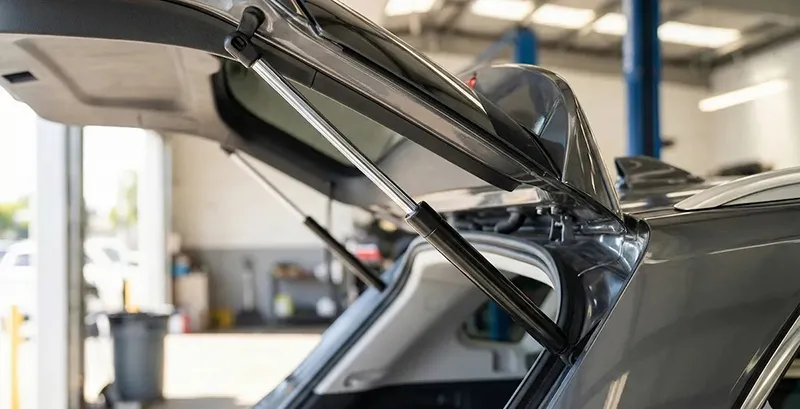
Boot struts (predominantly referred to as trunk lifts or liftgate supports in North America) are gas-charged springs engineered to assist in lifting, balancing, and holding open a vehicle’s boot lid or rear tailgate. They serve as critical automotive motion-control components, transforming what would otherwise be a heavy manual lift into a smooth, controlled kinetic process.
Signs Your Boot Struts Need Replacing
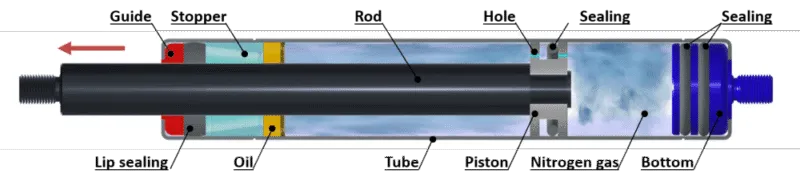
Gas struts rely on a precision-sealed internal pressure chamber and advanced multi-lobe seals to sustain predefined lifting forces. Over time, cyclic wear, seal degradation, and environmental exposure cause the compressed nitrogen gas to escape. Total component degradation typically manifests through six distinct operational failures:
- Boot Lid Fails to Stay Open: The boot lid drops down immediately after being opened, failing to support its own weight.
- Rear Hatch Slowly Drops: The tailgate opens completely but gradually drifts downward on its own over several minutes.
- Asymmetrical Left/Right Weakness: One side of the boot exhibits visible sagging, lower tension, or structural play compared to the opposite side.
- Unusually Heavy Boot Operation: The boot requires significant manual, physical lifting force from the user to force it into an open position.
- Visible Oil Leakage on the Cylinder: Fluid film, wet grime, or active oil pooling appears directly on the polished piston rod or the cylinder body.
- Lifting Failure in Cold Weather: The boot operates normally in warm temperatures but completely fails to stay open when ambient temperatures drop.
Why Boot Struts Fail?
Automotive lift supports operate under high internal pressure and tight mechanical tolerances. Component degradation occurs through specific physical wear patterns and environmental exposure:
- Natural Gas Permeation: Nitrogen gas slowly permeates through the rubber seals over time, causing a gradual loss of lifting force.
- Seal Wear and Leakage: Friction from daily use scuffs the internal seals, allowing compressed gas to bypass the chamber and escape.
- Thermal Gas Contraction: Extreme cold causes the internal nitrogen gas to contract, dropping the lifting force below the weight of the boot lid.
- Environmental Corrosion: Moisture, road salt, and mud cause surface rust on the cylinder and piston rod, which shreds the internal seals during operation.
- Mechanical Fatigue: Repeated opening and closing cycles fatigue the internal valving and end ball joints, degrading smooth operation.
- Substandard Manufacturing: Low-grade aftermarket parts utilize inferior seals and poor surface finishing, leading to rapid pressure loss.
GASTAC Boot Struts Designed for Multiple Vehicle Applications
The absolute biggest headache when ordering car parts online is fitment anxiety: “Will this actually fit my specific car?” GASTAC solves this by engineering 1:1 OE (Original Equipment) specification struts. We map the exact length, stroke, and Newton force for over 99% of vehicles on European roads:
- The Daily Drivers: Tailored for hatchbacks and saloons like the Ford Focus, Volkswagen Golf, Vauxhall Corsa, and Toyota Yaris.
- The Family Haulers: Extra lifting power designed for heavy tailgates on popular SUVs like the Nissan Qashqai, Land Rover, and Kia Sportage.
- The Premium Estates: Sophisticated, smooth dampening built for the Audi A4 Avant, Mercedes-Benz C-Class Estate, and BMW 3-Series.
Original OEM Boot Struts Specification Sheet
| OEM | Photo | Rod / Tube Ø | Stroke | Extended Length | Force | Year |
|---|---|---|---|---|---|---|
| 8K9827552A | 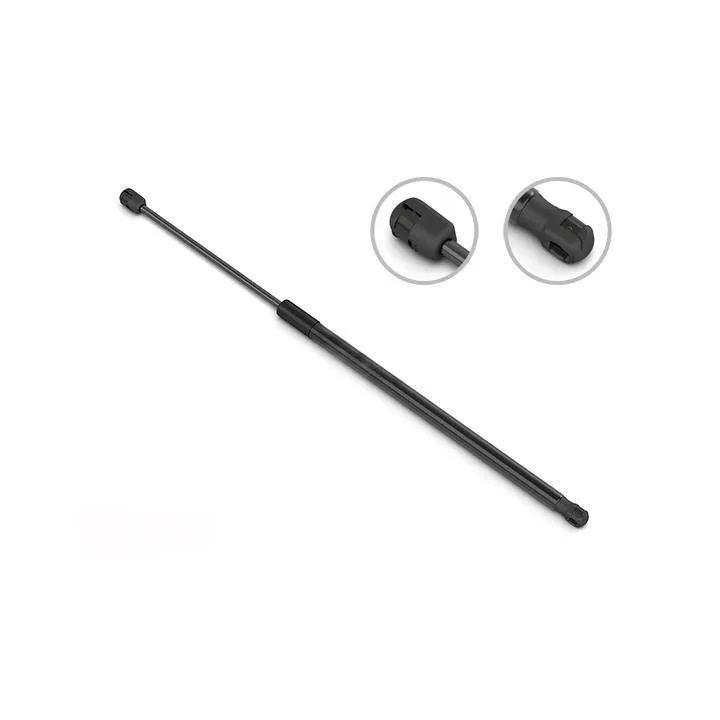 | 8 / 18 mm | 185 mm | 500 mm | 450N | AUDI A4 2007 – 2016 |
| 51785412 | 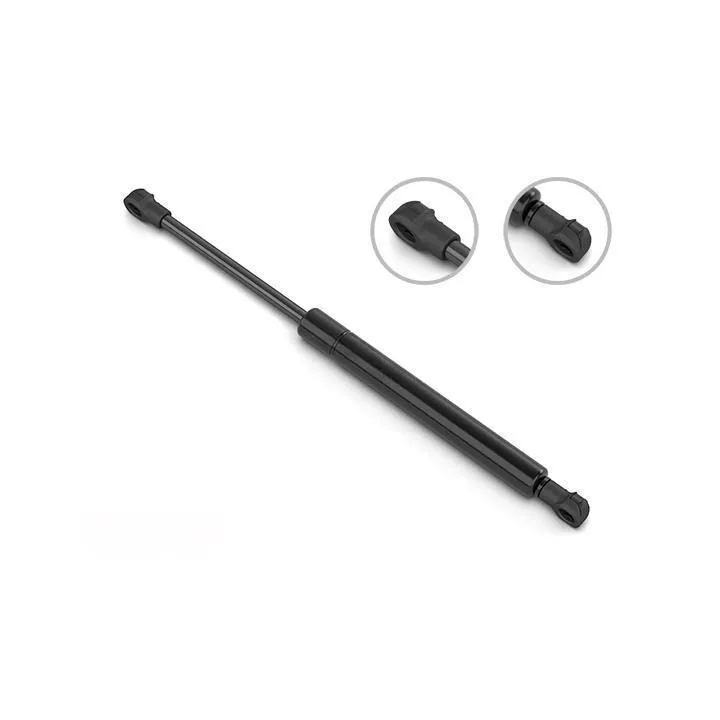 | 8 / 18 mm | 160 mm | 455 mm | 350N | FIAT 500 2007 – … |
| 9639853880 | 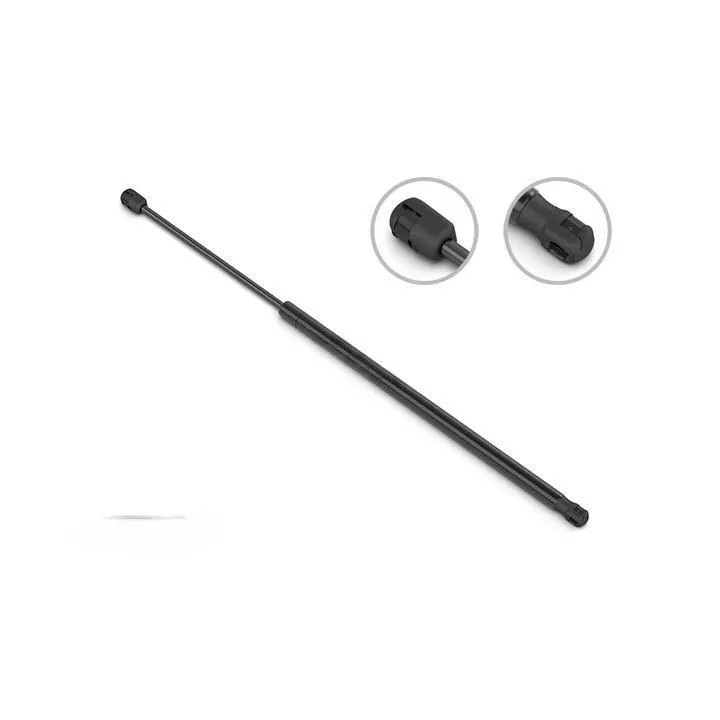 | 8 / 18 mm | 160 mm | 445 mm | 420N | CITROËN C3 2002 – 2010 |
| 1U6827550B | 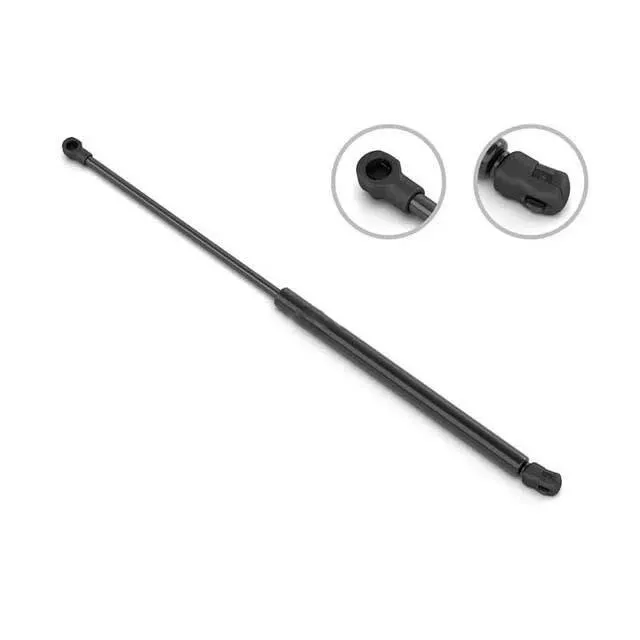 | 8 / 18 mm | 195 mm | 495 mm | 515N | SKODA OCTAVIA 1996 – 2010 |
| 5G6827550C | 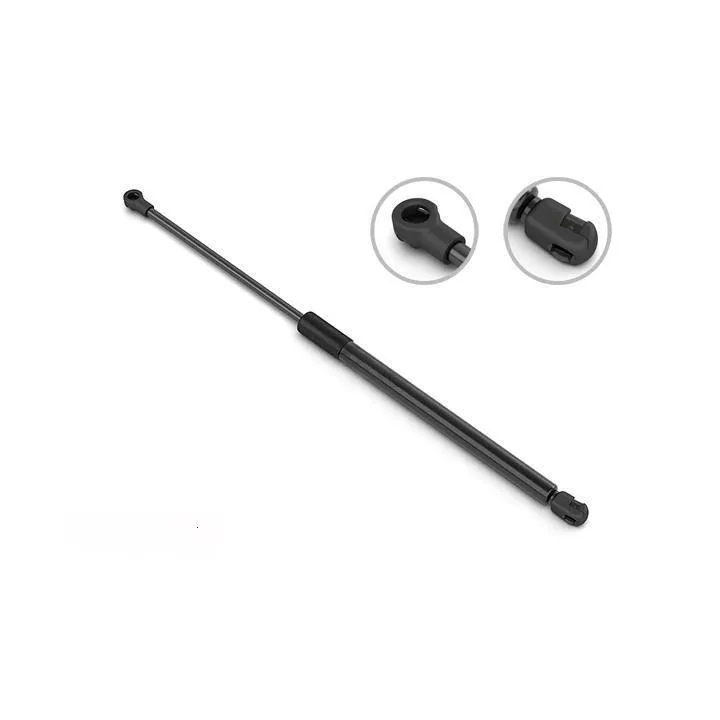 | 8 / 18 mm | 180 mm | 530 mm | 520N | VW GOLF 2012 – … |
If you require OEM replacement parts for other vehicle models or standard gas springs for diverse industrial applications, please visit the GASTAC online store. We offer factory-direct pricing, precise 1:1 cross-referencing, and heavy-duty engineering to ensure you find the perfect drop-in solution for your needs.
Interior Technology
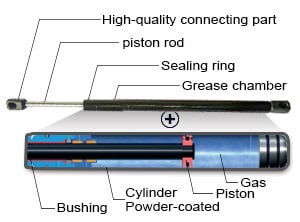
- Highest corrosion resistance achieved through powder coated cyclinders and special treated piston rod surfaces.
- Minimal friction for the production of lowest extension forces.
- Great life cycles.
- Protection against vibration and light side forces.
- Integrated grease chamber.
- Low break away forces.
- Installation and storage in any position.
Do You Need to Replace One or Both Struts?
Liftgate struts are typically installed in pairs, and both sides work together to balance the weight of the rear hatch. For best performance:
- Always replace both struts at the same time
- Avoid mixing old and new components
- Ensure balanced lifting force on both sides
This ensures smooth, stable, and long-lasting operation.
How to Choose the Right Boot Struts?
- Verify Year, Make, and Model: You must precisely match your vehicle’s specific production year, brand, and trim level to ensure the physical dimensions fit.
- Distinguish Manual vs. Power Liftgate: Ensure compatibility with your specific boot system, as incorrect pressure ratings will strain or damage automatic electric motors.
- Always Purchase and Replace in Pairs: You must change both sides simultaneously to prevent uneven lifting force, hinge warping, and premature boot strut failure.
- Cross-Reference Dimensions and Force: Check the extended length, stroke distance, and Newton (F1) force rating to guarantee the struts can support the heavy hatch weight in cold weather.
- Check the End-Fitting Design: Match the new socket configuration to your vehicle’s existing ball studs for a direct, tool-free snap-on installation.
How to Replace Boot Struts?
Replacing car boot struts is a straightforward, 5-minute DIY task that requires only a flat-head screwdriver and a safety support pole. Because gas struts use a standard clip-on ball-and-socket configuration, installation follows a simple mechanical process. Follow these four steps to complete the replacement:
- Prop the Boot Open: Securely prop the boot lid open using a support pole or enlist an assistant. Never skip this step, as the boot lid will instantly drop once one strut is removed.
- Release the Metal Clips: Locate the flat metal retaining clip on the back of the old strut’s ball socket. Insert a flat-head screwdriver under the clip and pry it outward about 5mm to unlock the joint. Do not remove the clip entirely.
- Pop Off the Old Boot Strut: While holding the clip open, pull the ball socket away from the vehicle’s mounted ball stud to detach it. Repeat for the other end to remove the strut completely.
- Snap on the New Boot Strut: Align the ball socket of the new boot strut directly over the vehicle’s ball stud and press firmly until it snaps into place. You do not need to pry the clip on the new strut—simply push it on. Repeat the process for the opposite side.
Original OEM vs GASTAC Boot Struts
| Technical Feature | Cheap Generic Struts | Premium Engineering (GASTAC) | Why It Matters to You |
|---|---|---|---|
| Sealing System | Single-lip rubber seal. Stiffens, cracks, and leaks gas in cold weather. | Multi-lip synthetic rubber sealing system. | Retains pressure even in extreme low temperatures (-40°C). |
| Opening Motion | Linear velocity; snaps open violently. | Hydraulic end-damping for smooth motion. | Prevents shock and protects hinges & chassis. |
| Piston Coating | Painted steel; prone to rust and seal damage. | QPQ nitrided mirror-smooth surface. | Reduces friction and prevents corrosion failure. |
| Lifespan | Typically 6–12 months under real use. | Tested for 100,000+ cycles. | Long-term reliability; fewer replacements needed. |

Contact Us
Interested in our products, pricing, MOQ, or customized solutions? Fill out the form below to submit your inquiry or request a quote, and our team will get back to you within 24 hours.